

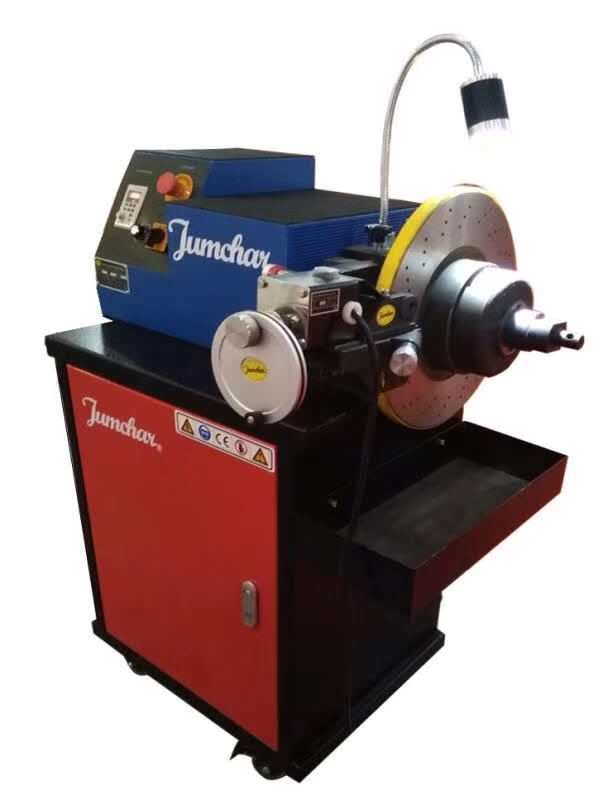
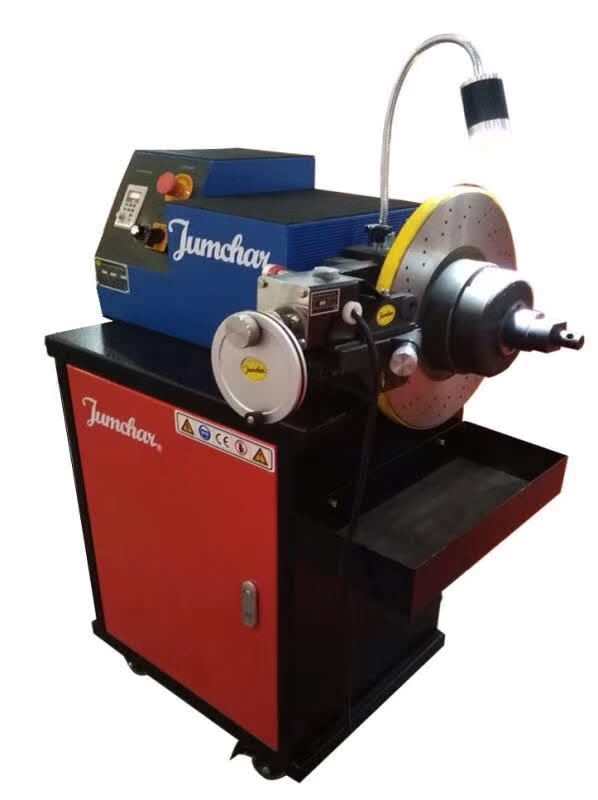
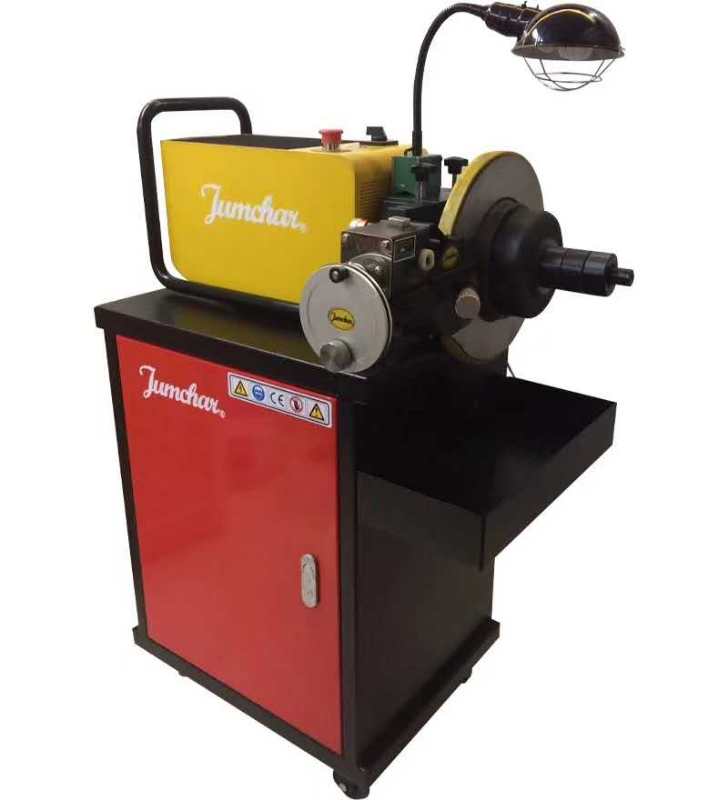
| Product name | Contiuously variable speed Brake Lathe |
| Model name | AM-552 |
| Working height min/max | 1m |
| Drive speed | 20/200rpm |
| Motor power | 750W |
| Electrical specifications | 220V/50Hz 110V/60Hz |
| Ambient temperature range | -30~60℃ |
| Maximum diameter of brake disc | 500mm |
| Thickness of brake disc | 6-40mm |
| Cutting depth per knob | 0.005-0.015mm |
| Cutting precision | ≤0.00-0.003mm |
| Brake disc surface roughness RA | 1.5-2.0um |
| Packing size TOTAL | 0.43CBM |
| Plywood carton | 1070*480*460mm |
| Paper carton | 830*380*780mm |
| Net weight | 120Kg in two cartons |
| Gross weight | 133kg in two cartons |
1. Brake pedal jitter: usually drive the new car after a few hundred miles or replace new brake discs of a mileage,
caused by brake disc face runout tolerance exceeds bid brake pump back, form a cyclical hydraulic back effect,
at the same time due to the high temperature pulse brakes, the brake plate of internal stress release, causing the
brake plate deformation, cause the brake pedal jitter and the steering wheel vibration.
2. Rust: the rusting of the brake disc is caused by the long-term storage of the vehicle. In addition, some of the rust
is caused by the chemical action of salt gravel, which makes the surface of the brake disc rough and uneven and
affects the braking effect.
3. Brake offset: due to thick road dust, grease, brake debris and basic rust, a layer of friction coefficient is often
different from the previous surface layer, resulting in unequal friction between the corresponding two wheel brake
discs, causing the brake to run off, and sometimes accompanied by sharp noise.